 LearnSynth
Home
LearnSynth
Home
Two days, after which sales and delivery describe the project the same way.
A closed workshop for a single team: 6–8 people from your organisation, two days of work on your real projects, and a follow-up session after 30 days. Run by a practitioner with nearly 20 years in enterprise IT who still works with clients.
The brief is six questions about the team, your sector and what you want to change. A quote and a scope proposal come back within 48 working hours. If I judge that the workshop does not address your problem, I will write that instead of issuing an offer.
- Price
- 20,000 PLN net per group of 6–8
- Format
- 2 days × 8 h + 30-day follow-up included
- Place
- On site or online MS Teams, work in breakout teams
- Language
- English or Polish bilingual PL/EN worksheets
Four costs that only show up in the project's final bill.
None of them belongs to one person. All four come from how the organisation talks to the client before anyone signs a contract.
Unpaid hours on proposals that never stood a chance.
The team writes a proposal for weeks because nobody checked first whether there is a budget, a sponsor and a real problem on the client's side. That time cannot be recovered or invoiced.
Projects that should never have started.
Walking out of a project in week five costs many times more than declining before signature. The warning signs were usually visible — nobody named them out loud.
“That wasn't in the agreement.”
Sales and delivery describe the same project in two different languages. The gap is paid for by the team that has to deliver it — in overtime, or in the client relationship.
Scope that arrived by email, or from AI.
A document nobody validated with the client in a live conversation: contradictory assumptions, promises without an owner, requirements without context. The project starts with a built-in defect.
Buyers ask AI first and decide after talking to a person. In a Gartner survey of 645 B2B buyers, 69% validate AI-generated insights in a conversation with a sales rep (Gartner, 2026 ↗). The outcome turns on the quality of that one conversation. That conversation is what this workshop is about.
The workshop works best when both sides are in the group.
The people who talk to the client, and the people who deliver afterwards. After two days they describe a project in the same language.
- Solution Architect — sits in client meetings and writes the scope that later takes on a life of its own.
- Tech Team Leader, Engineering Manager — receives the project to deliver and needs to know what the client actually bought.
- Pre-Sales Consultant, Technical Sales — wants to run the conversation from an advisor’s position.
- Account Manager, BDM, Project Manager — moving into a client-advisory role.
- IT Director, Head of Delivery — wants one standard where sales meets delivery.
- Consultant from an advisory team — runs discovery at the client and hands the findings on.
For this to make sense, the group needs
- 2–3 years in IT: delivery, architecture, technical sales or management
- at least one client conversation about scope or a proposal already behind them
- two or three real situations from your projects to practise the tools on
No sales background is required — we teach that from the ground up. Access to the client is required: every tool assumes the team talks to people on the client's side rather than working from a document alone.
Four steps from brief to follow-up.
No “let's get to know each other” stage and no sales deck. The first conversation is about your context.
-
3 minutes
Brief
You fill in a short form: who should be in the group, what sector you work in, and what specifically you want to change in client conversations.
-
48 working hours
Quote and context
I send back a quote and a scope proposal with examples matched to your sector. If I can see the problem sits elsewhere, I say so at this stage.
-
2 days × 8 h
Workshop
We agree the date together. On site or online. 30% theory, 70% work on your own situations — every block ends with a completed document.
-
after 30 days
Follow-up
An online session with the same group: what became routine, what got stuck, where the tools need adjusting to your process. Included in the price.
Pricing is published. For the standard edition there is no “ask for a quote”.
The price covers the whole group. With eight participants that is 2,500 PLN net per person for two days and the follow-up.
Included
- Two days of facilitation for the whole group
- Examples and situations matched to your sector
- Six working templates, completed during the workshop
- A materials folder and a certificate for every participant
- An online follow-up session after 30 days
Not included
The room and catering for an on-site edition are on your side. Travel for the facilitator outside the Tricity area is settled in the quote — it appears there openly, before anything is signed. VAT invoice issued by ON Technologies Marcin Karkocha.
Three answers that help you decide without talking to me.
Written for the person who has to make the decision and spend the money on it. No email signup and no form.
How do I tell the problem is the client conversation and not our price?
Four situations that reveal it, and a half-hour test on your last five lost opportunities — including the case where a workshop will not fix anything.
Read it → ✳ 02Send one person, or train the whole team?
When a single open-cohort seat is enough, when the team is needed, how the cost per person compares, and the most common way a training budget is wasted.
Read it → ✳ 03What should we measure 60–90 days after the workshop?
Four numbers you can collect without a new tool, one binary check visible in week one, and one metric not worth measuring in that window.
Read it →The remaining answers and nine free tools are in the knowledge base. Some of them are written for the consultant rather than the manager — the first sentence tells you which.
Marcin Karkocha
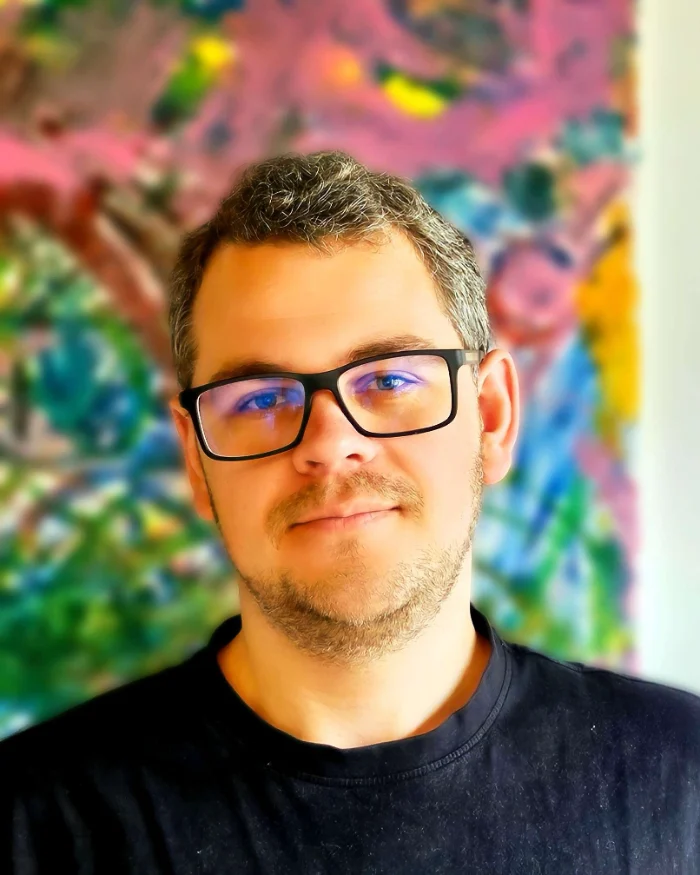
Marcin Karkocha
Chief Technology Strategist · Founder, Caterpillar GardenNearly 20 years in enterprise IT — client conversations, advisory and project delivery across Europe and Asia. Corporate clients in finance, manufacturing and technology. Ran discovery at client sites, shaped how work was set up before contracts were signed, and closed complex advisory engagements from the first conversation to signature.
Creator of the Value-oriented Consulting Pre-Sales method — built on real sales cycles with corporate clients. Co-author of a chapter in “AI and Resilient Organizations” (Routledge 2025). More about the facilitator →
Before you fill in the brief — read the manager briefing.
Fourteen pages: what exactly changes, which levers the return depends on, when the workshop will not work, which metrics to watch over 60–90 days, and what adoption looks like after the two days. No email signup and no form.
Download the briefing (PDF) ↗There is also a ten-question checklist (PDF) you can run against the last proposal your team sent — the score shows what was skipped.
The training arm of a working consulting practice.
Caterpillar Garden runs projects for corporate clients. The training comes out of that work: every tool was first used in a real sales cycle or a real project, then written up so it could be handed to a team. There is no licensed course here and no trainer who does not work at client sites.
- Value-oriented Consulting Pre-Sales — the programme on offer
- Value stream mapping in consulting work
- Scoping advisory projects
- Account stewardship as a value stream
- Gathering requirements around value
- Running a digital sovereignty audit
- Hypothesis management — deciding without a full plan
- Testing hypotheses by playing out scenarios
- Stakeholder work — four dimensions of mapping influence
- Five areas of managing yourself, for leaders and consultants
Today one of these has a finished programme, a price and a date: VCPS. The rest are described on the training map as ideas — no prices, no dates — because they get built when a company asks for them. Most of that map came about exactly that way. If your problem sits in the second track, it is worth starting the conversation there rather than with VCPS.
One programme today, facilitated personally.
What you book as a closed edition: one workshop that covers the whole path from the first client conversation to a signed contract. A page of its own describes it hour by hour and tool by tool.
Value-oriented Consulting Pre-Sales
Two days on how to talk to a client before the contract is signed: what actually needs to happen, who decides it, and whether the project is worth taking at all.
Full agenda, six tools and FAQ →- 2 days × 8 h, 30% theory, 70% practice
- 6 working templates completed during the workshop
- 30-day follow-up included
- Delivered in English or Polish
- Certificate and materials folder for everyone
Start with the brief. Three minutes.
Six questions about the team, your sector and what you want to change. The quote and scope proposal come back within 48 working hours. If the workshop does not address your problem, I will write that instead of issuing an offer.